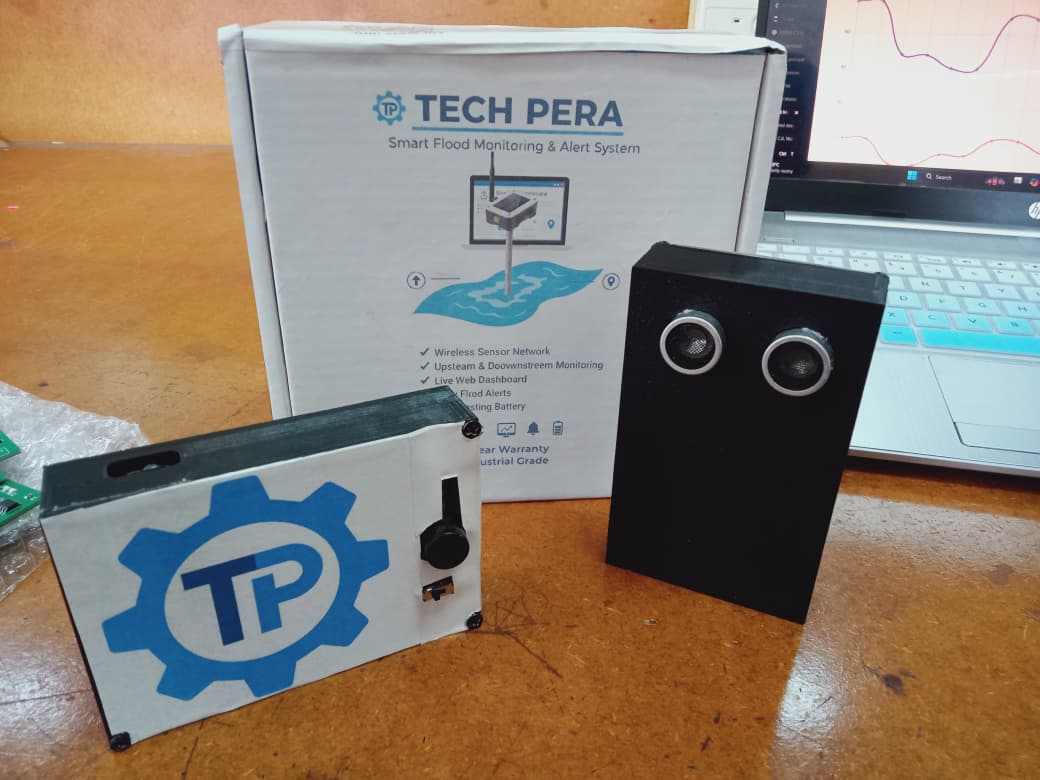
System Architecture
An IoT-based flood early warning system using ESP32 and ESP-NOW wireless communication for real-time water level monitoring, intelligent alert generation, and live dashboard visualization.
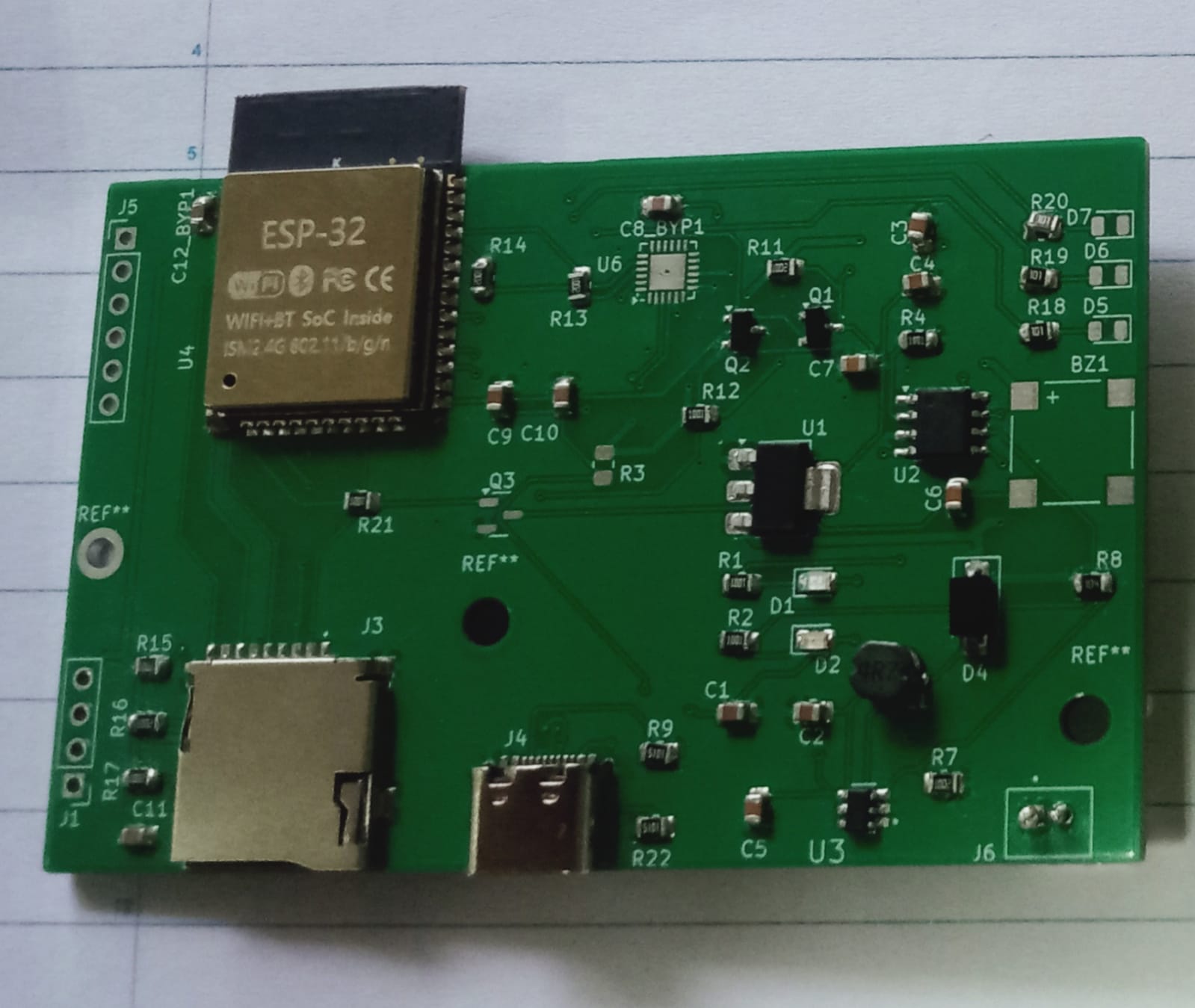
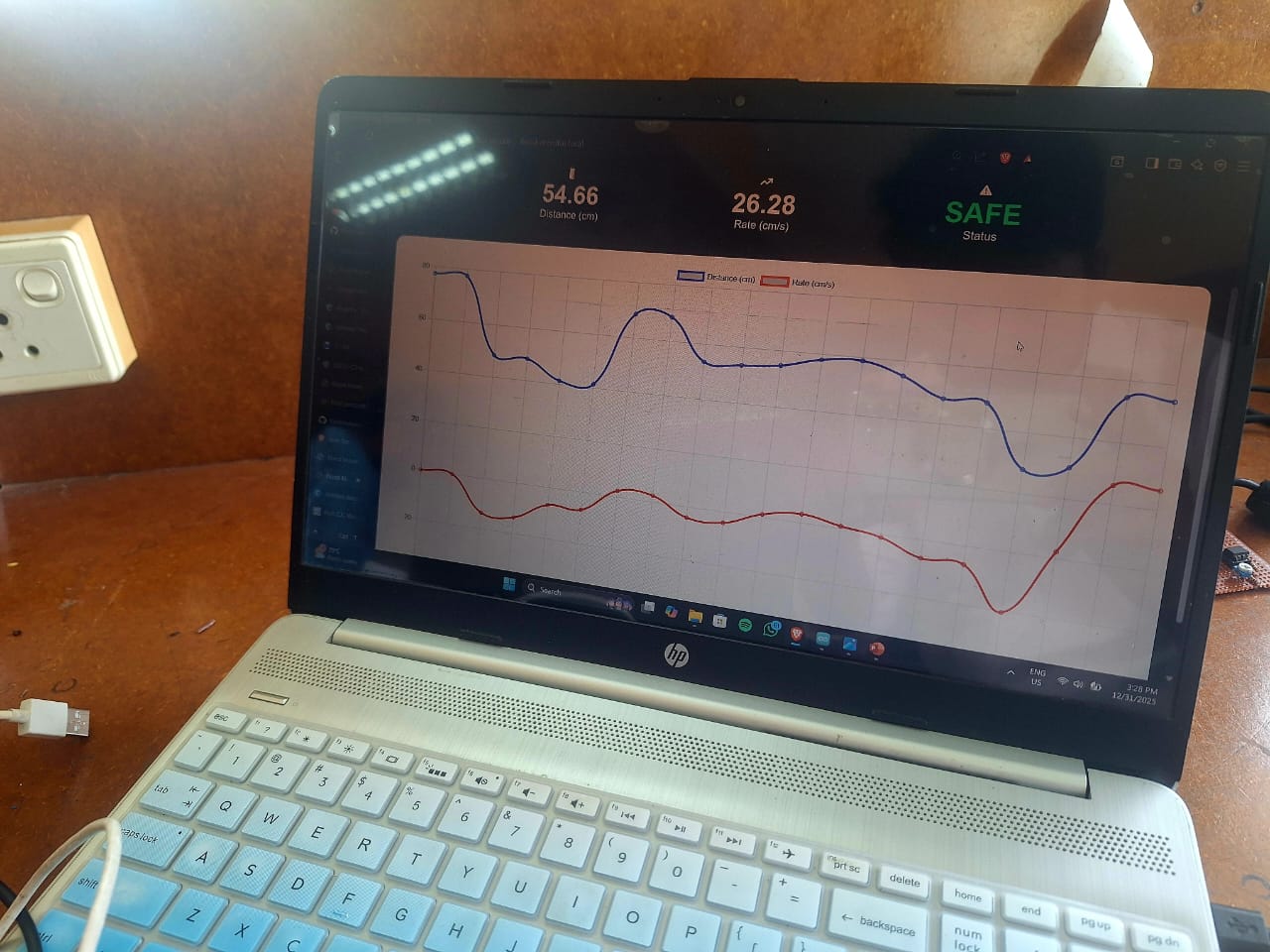
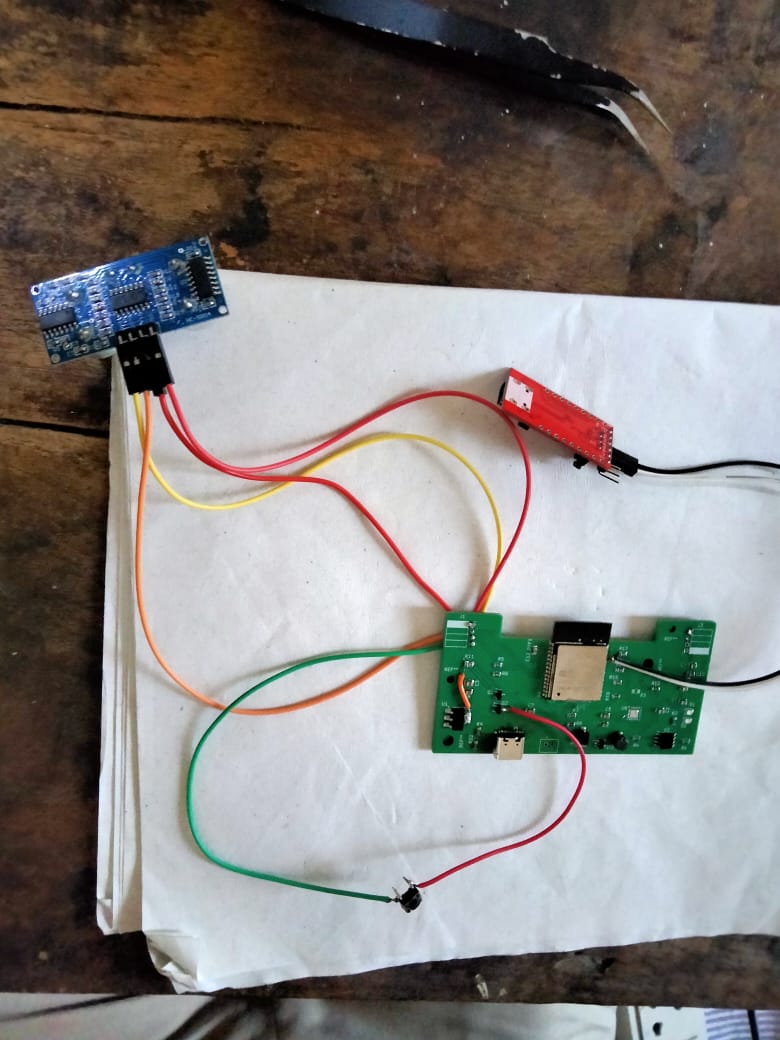
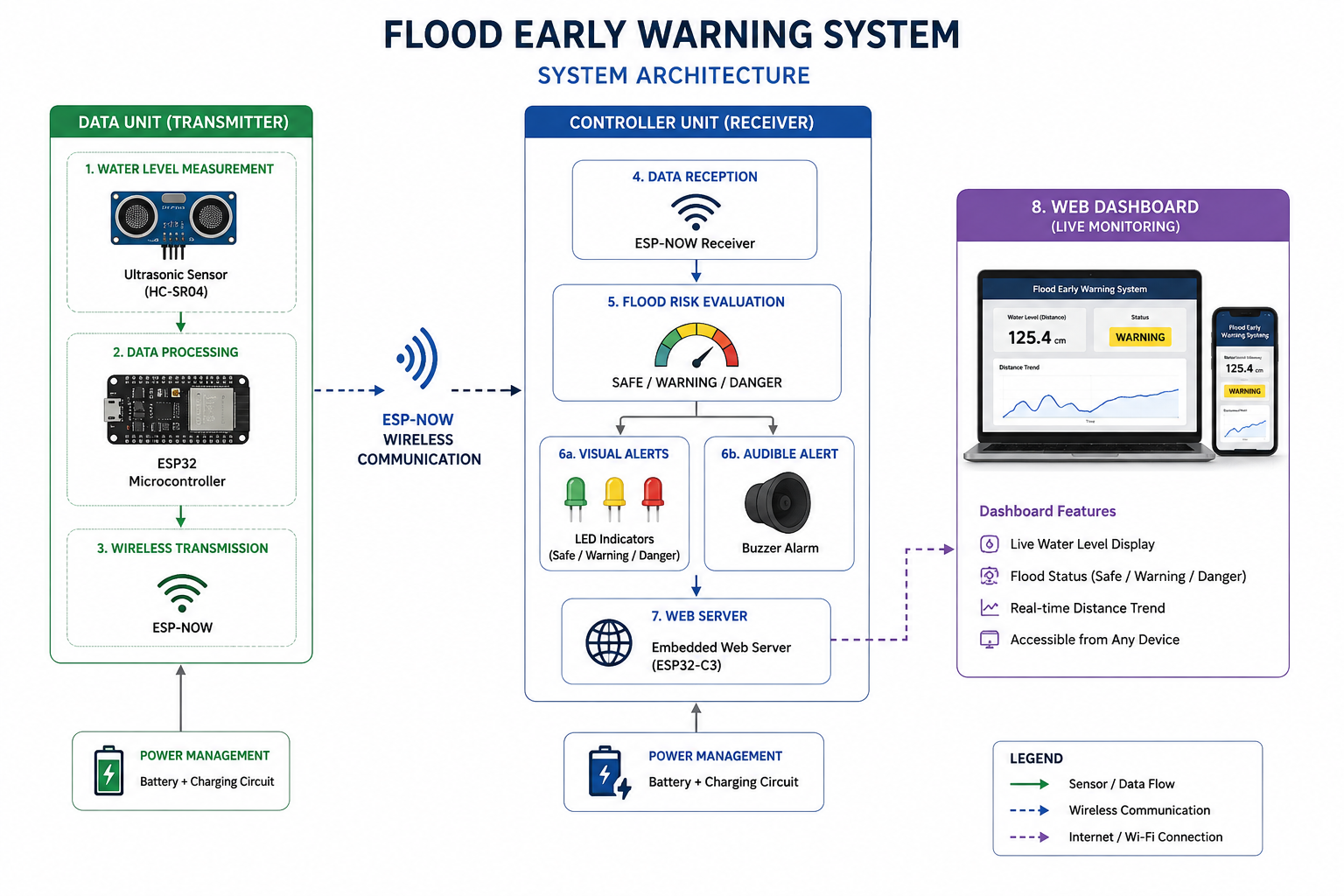
This project presents a real-time Flood Early Warning System consisting of distributed sensor nodes and a centralized controller. Water levels are measured using ultrasonic sensors and transmitted wirelessly via ESP-NOW. The controller evaluates flood risk levels, activates visual and audible alerts, and hosts a live web dashboard for remote monitoring.
Floods often occur without sufficient localized monitoring, preventing communities from receiving timely warnings. Conventional monitoring methods can be expensive and difficult to deploy over large areas. This project addresses these challenges by providing a low-cost, wireless, and scalable IoT-based flood monitoring solution capable of delivering real-time alerts.
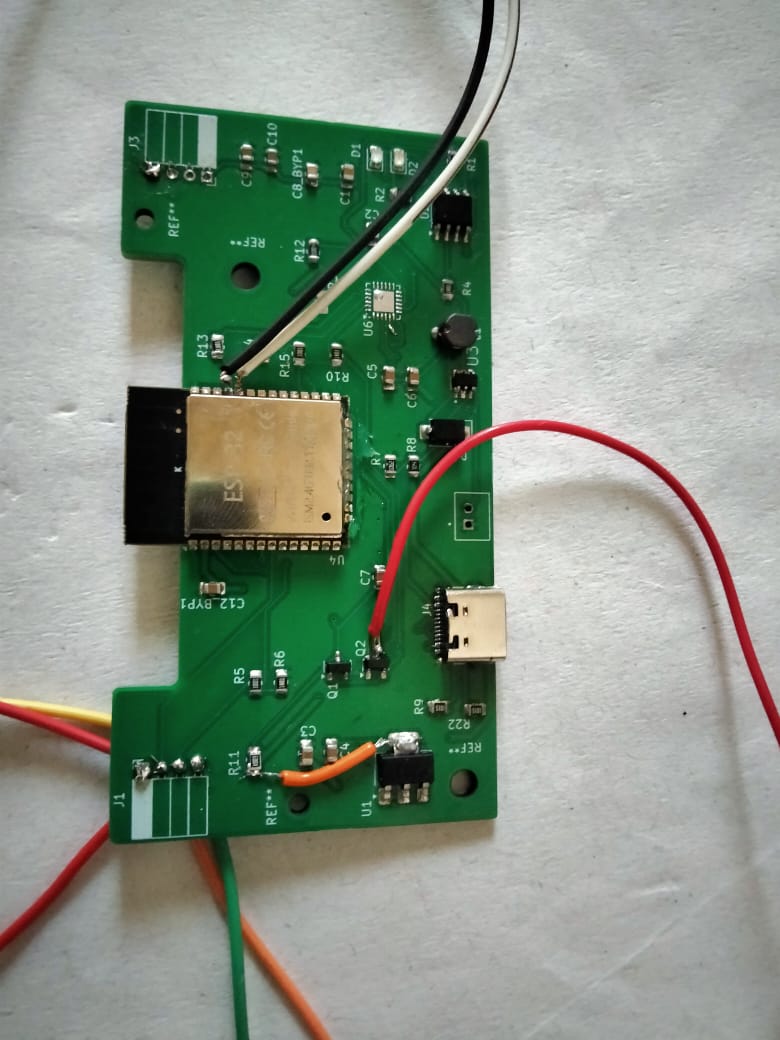
The firmware was developed using the Arduino framework. The Data Unit periodically measures water level using an ultrasonic sensor and transmits measurements via ESP-NOW. The Controller Unit receives the measurements, evaluates predefined threshold levels, activates LEDs and buzzer alerts, and hosts a real-time web server for monitoring.